Affiliate disclosure: Some links in this guide are affiliate links. If you book through them, I may earn a small commission at no extra cost to you. I only recommend tours and places I would send my own guests to — and plenty of what follows is completely free.
Two days is the trip most of my guests actually take: a weekend getaway from the city, or a tastes of the Canadian Rockies during a longer stay in the province. It is enough time to fall for this spectacular valley — if you spend it well.
The mistake first-timers make is trying to “do Banff” from a checklist of ten stops a day. Here is the two-day plan I give friends and guests, built around one day in Canmore and one day in Banff, in that order — deliberately.
Good to know
- Park pass: not needed in Canmore; required in Banff — $12.25 per adult per day in 2026
- Kananaskis Conservation Pass (Grassi Lakes): $15 per vehicle per day, or $90 a year
- Roam Route 3 bus: about 25 minutes, $6 per adult one way
- Banff Gondola: book in advance; Roam Route 1 runs from downtown Banff to the base
- Lake Louise: about 60 km (40–45 minutes) west of Banff; ski resort opened November 6
Before you go: the three things that trip people up
You may not need a park pass on Day 1 — and you definitely need one on Day 2. Canmore sits just outside Banff National Park, so wandering the town costs you nothing in passes. The moment you stop anywhere inside the park — including the town of Banff itself — every adult needs a Parks Canada pass. In 2026 that is $12.25 per adult per day, $10.75 for seniors, or $24.50 for a family/group of up to seven people in one vehicle; kids 17 and under are free. A day pass is valid until 4 p.m. the following day, so one purchase can cover a well-timed Banff day. Buy it online from Parks Canada before you arrive, at the park gates on Highway 1 east of Banff, or at the Banff visitor centre. If you will spend seven or more days in the parks within a year, the annual Discovery Pass ($83.50 per adult) pays for itself. One more nuance: driving straight through the park without stopping requires no pass at all — it is stopping that counts.
More…
The drive is short; the parking is the problem. Canmore to Banff is about 25 km — roughly 20 minutes on Highway 1. Getting there is easy. What you do with the car once you arrive is the whole game, and Day 2 below is built around it.
Dress for changing conditions. The mountain trick is not that it is simply colder — at about 1,350 metres, the sun is strong enough that a calm, sunny afternoon can feel hotter than the same temperature down on the prairie. The trick is how fast it swings: sun to shade, calm to wind, valley floor to a windy ridge, t-shirt weather at lunch to near-freezing by supper. Dress in layers you can add and shed through the day, carry a windproof outer layer even in summer, and wear footwear with grip. From late autumn through spring, add a real winter jacket to that system — but the layers, not any single heavy coat, are what will matter most in your bag.
Day 1: Canmore itself
Morning — Grassi Lakes or the Nordic Centre
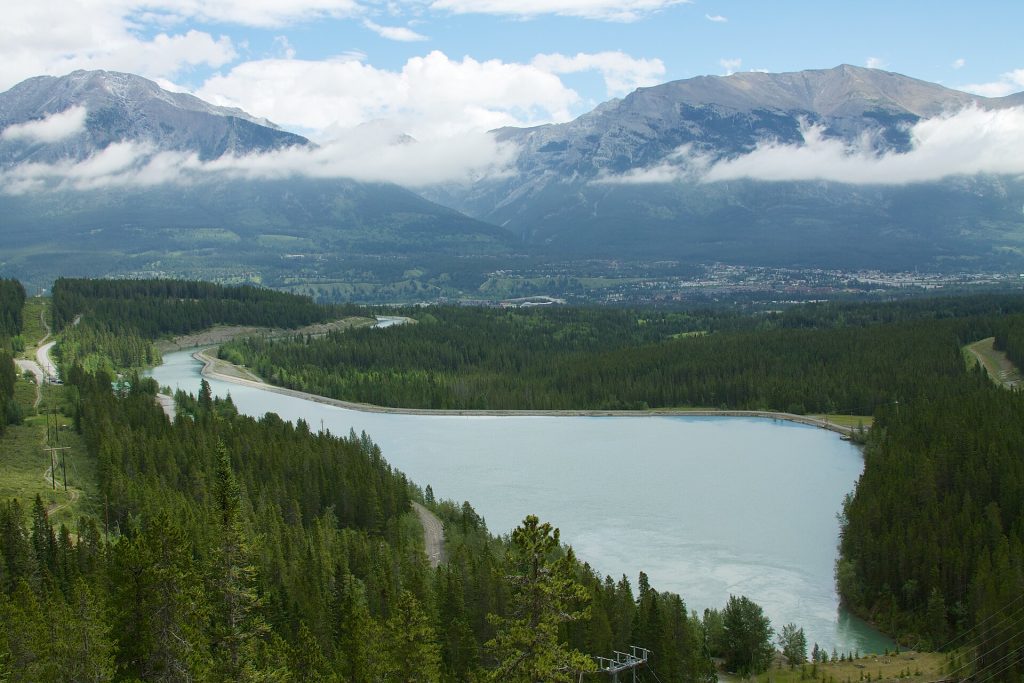
Start with the hike locals recommend to every first-timer: Grassi Lakes, a short drive up Spray Lakes Road from downtown. Two small, startlingly turquoise lakes sit under limestone cliffs, reached by a trail of about 2 km each way. A word of honesty for 2026: a rockslide closed the area in June, and it reopened in August. In late November, the easier Interpretive Trail closes for the winter because of ice flows, and the Upper Trail stays open but icy — bring microspikes, and check the Alberta Parks trail report the morning you go. Parking here requires a Kananaskis Conservation Pass ($15 per vehicle per day, or $90 a year), bought online and tied to your licence plate. It is a different pass from the national park pass, and confusing the two is the most common fine I see guests risk.
More…
If the trail report looks grim, swap in the Canmore Nordic Centre, the cross-country venue built for the 1988 Winter Olympics, five minutes from downtown. In winter it grooms more than 100 km of ski trails (rentals and lessons on site); in summer the same network is walking and biking trails. The same Kananaskis pass covers parking.
Midday — Main Street, properly
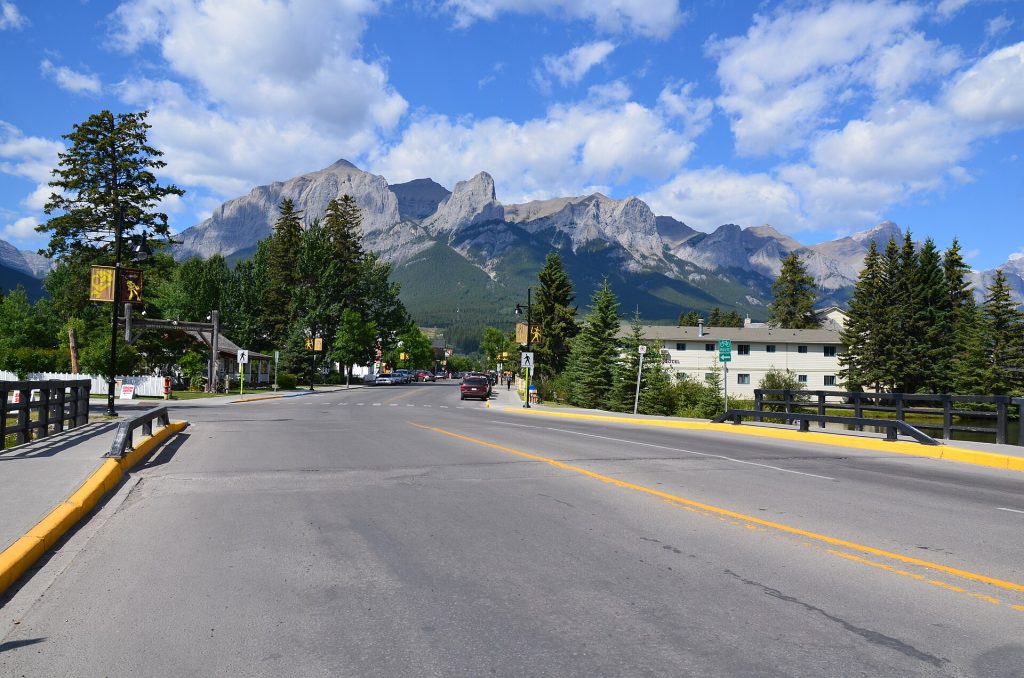
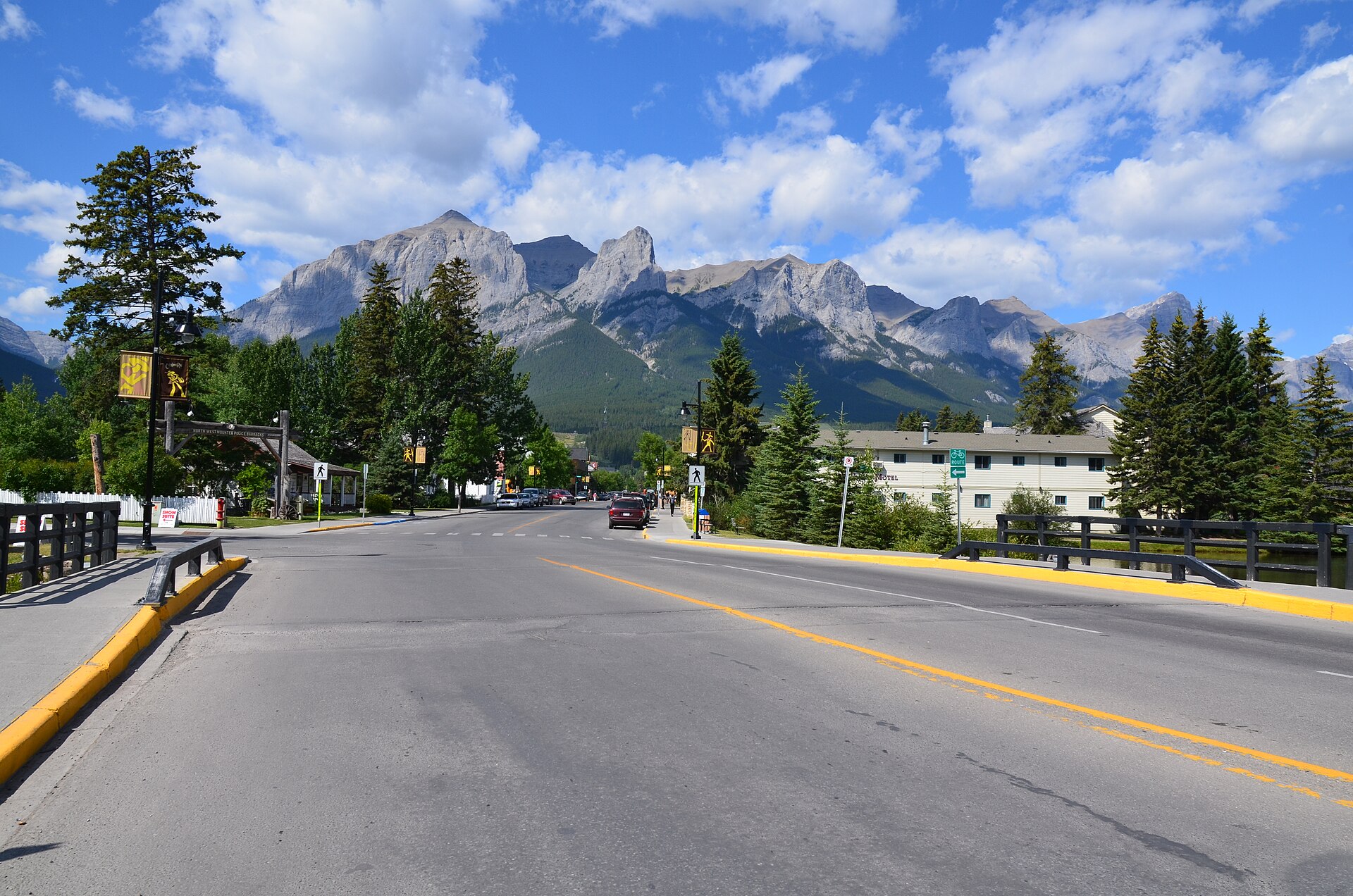
Come back down into town for lunch on 8th Street (Main Street), Canmore’s old main drag. This is not a tourist strip — it is a working street of independent cafés, bakeries, gear shops, and bookstores, with the Three Sisters peaks filling the end of the road. Graze rather than commit: coffee and a bagel, a wander through the shops, then a pint later at the Grizzly Paw, Canmore’s own brewery, if the afternoon stretches. Grocery stores sit just off Main Street, which matters if you are staying in a condo — most of my guests cook at least one meal in.
Afternoon — the river and the boardwalk
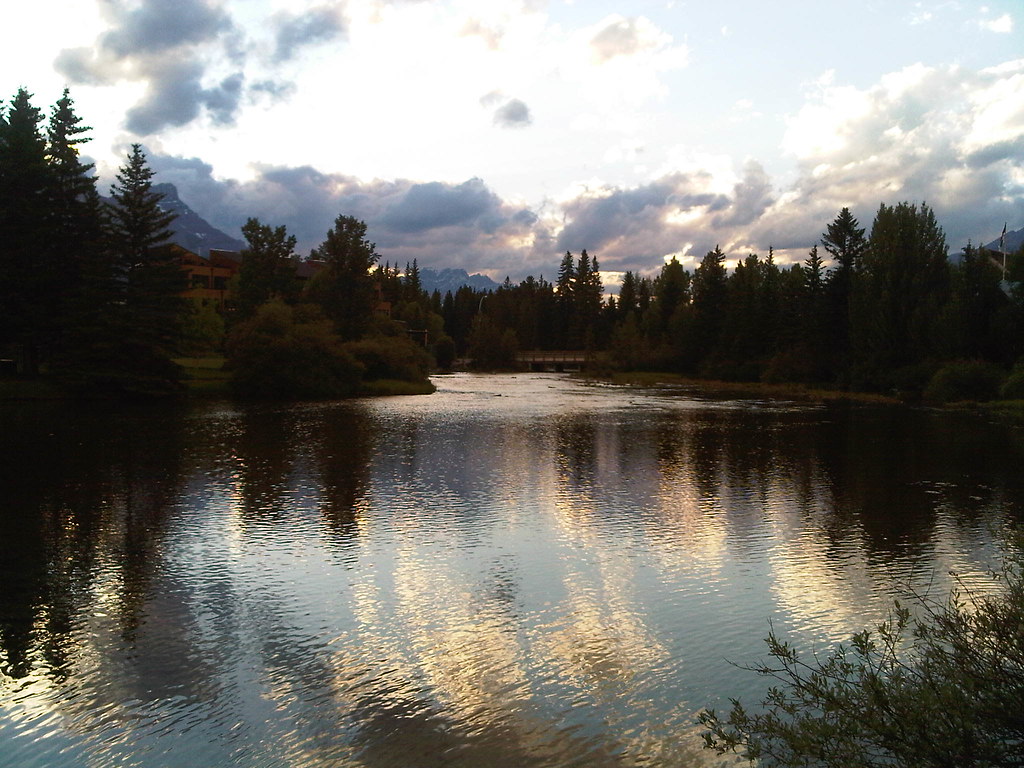
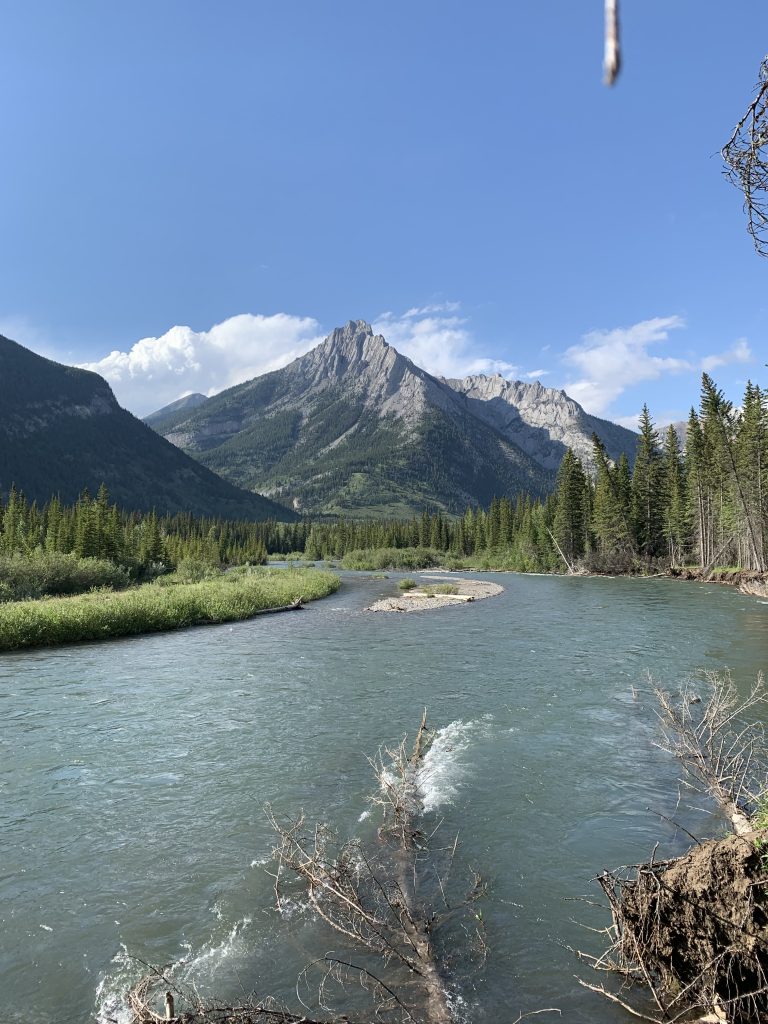
Walk it off on the Bow River trails and the Policeman’s Creek Boardwalk, a raised wooden path through spruce forest right in the middle of town, with the creek running underneath and mountain views opening at every gap in the trees. It is flat, easy, and quietly beautiful in every season. Cross the river on the pedestrian Engine Bridge and loop back along the far bank for the classic postcard view of the Three Sisters.
More…
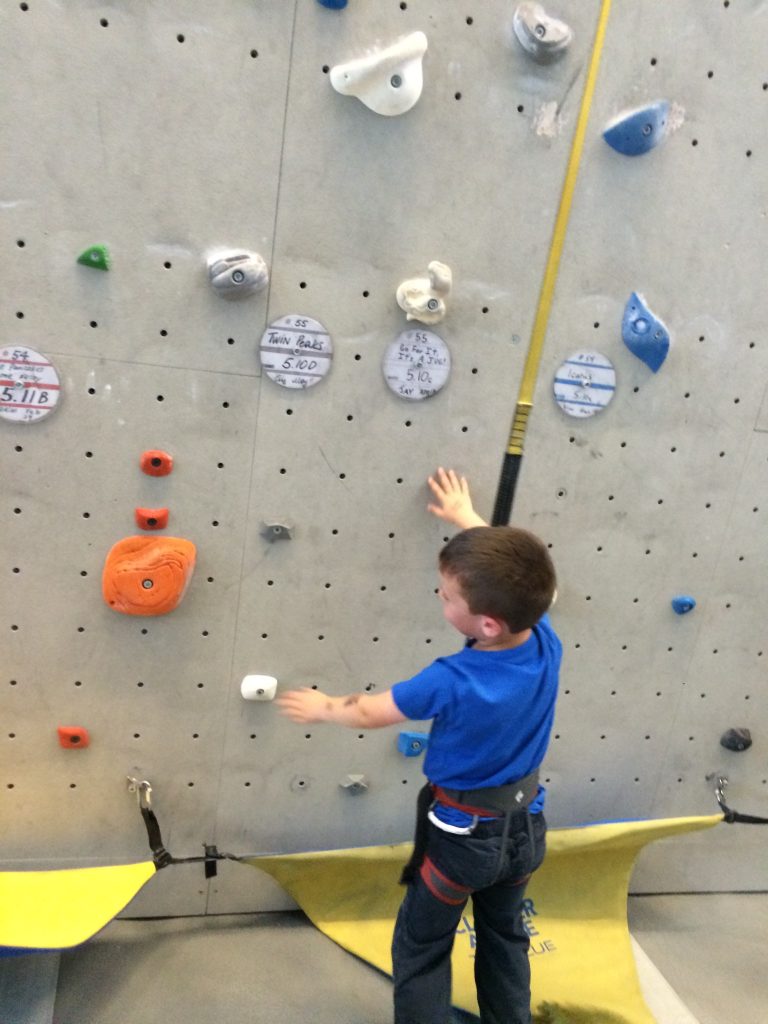
If the weather turns — mountain weather does — Elevation Place is Canmore’s indoor ace: a pool, a climbing wall, and a library under one roof, steps from downtown. Families, this is your rainy-day plan and your late-November plan alike.
Evening
Dinner on or near Main Street, then an early night. Tomorrow starts before the crowds.
Day 2: Banff, done calmly
Get there the easy way
You have two good options. Drive 20 minutes and go straight to the free parking lot at the Banff Train Station (about 500 stalls, nine-hour limit, an easy 8–10 minute walk to Banff Avenue). Do not feed the downtown meters: paid parking in the core runs 8 a.m. to 8 p.m. year-round, at $12 an hour from May through October and $7 an hour November through April, and in summer the core lots are typically full by 10 a.m.
More…
Or skip the car entirely on the Roam Transit Route 3 bus, which runs year-round between downtown Canmore and downtown Banff, about 25 minutes, $6 per adult one way, with buses every 30 to 60 minutes. Kids 12 and under ride free. A park pass is still required for everyone getting off in Banff — the bus does not exempt you — so buy it the day before.
Morning — Sulphur Mountain
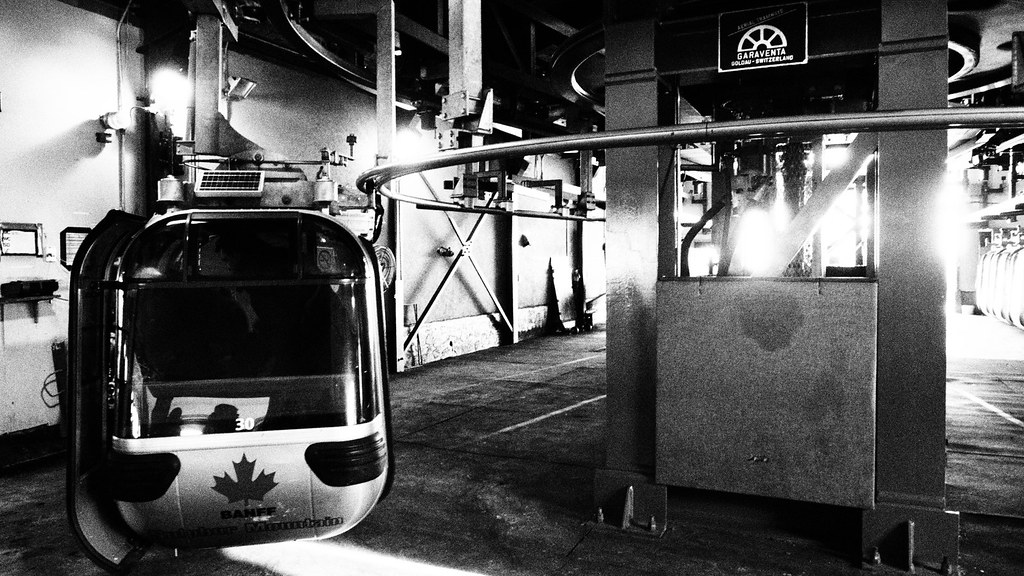
Head first to the Banff Gondola up Sulphur Mountain, before the midday lines build. Roam’s Route 1 bus runs from downtown Banff to the gondola base. The ride up is eight minutes; the summit boardwalk and the views down the Bow Valley are the single best orientation to this landscape I know. Booking a timed ticket ahead is wise in busy months: Banff Gondola tickets. Pair it with a soak next door at the Banff Upper Hot Springs, the Parks Canada-run outdoor mineral pool that stays open through winter — there are few better feelings than sitting in 39 °C water while snow lands on your hair. If you drive up instead of bussing, note the mountain lots now charge $17.50 a day in the May-to-October season.
Afternoon — town, falls, and one museum
Back in town, walk Banff Avenue end to end, then cross the Bow River bridge to Bow Falls, a wide, thundering cascade ten minutes from the main street — no hike required. If you have an hour indoors in you, the Cave and Basin National Historic Site (the birthplace of Canada’s national parks, reached by Roam Route 4 or a short drive) tells the 1883 hot-springs story that started all of this, and it is covered by your park pass.
If you have steam left: Lake Louise
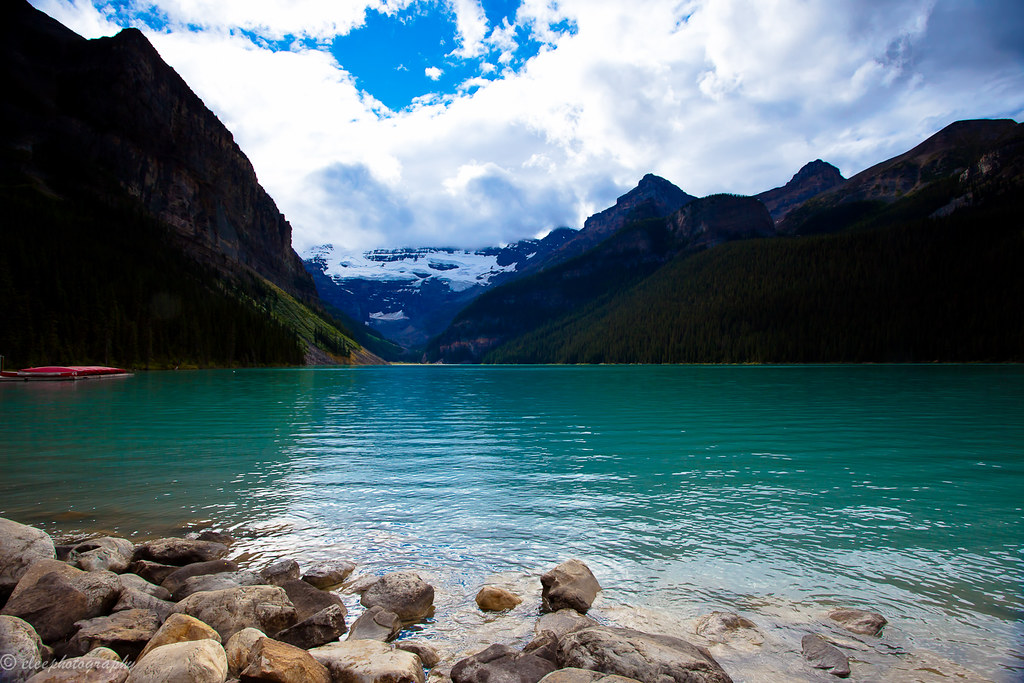
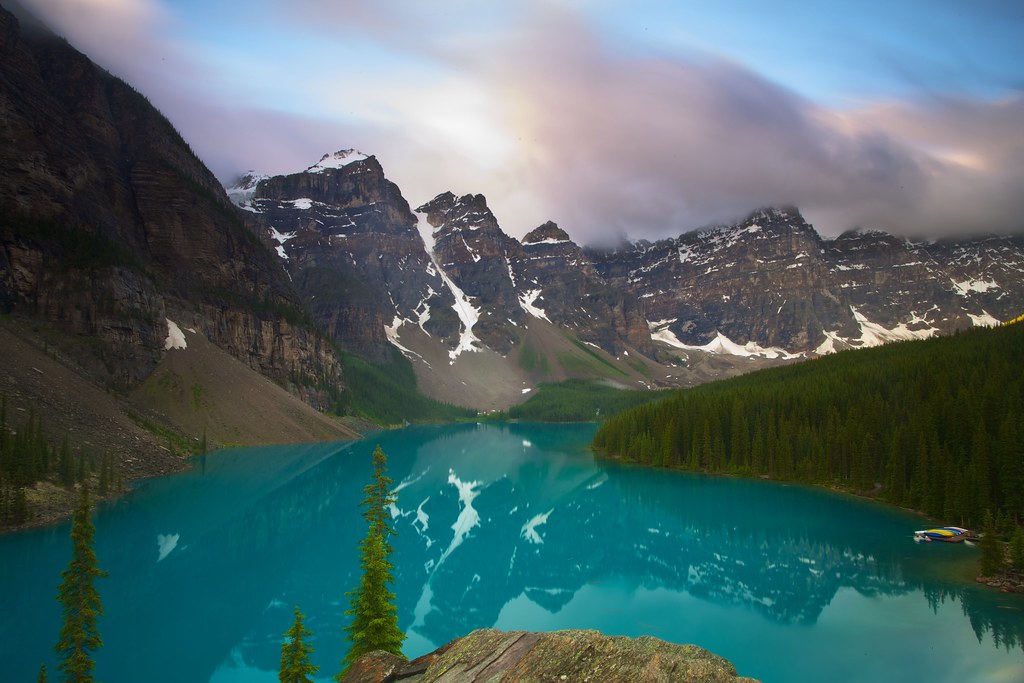
Lake Louise is about 60 km (40–45 minutes) west of Banff, and it fits a long summer day or a dedicated winter outing. From mid-May to mid-October, Parks Canada runs a reserved shuttle from the Lake Louise Park and Ride and charges $42 a day for lakeshore parking — book the shuttle and skip the lot lottery entirely. Outside that season the system switches off: you simply drive to the lakeshore and park free with your park pass. Car-free? Roam’s Route 8X express runs Banff to Lake Louise year-round for $12.50 one way, and guided day trips bundle the whole thing: Lake Louise and Moraine Lake day tours. And know this before you promise anyone Moraine Lake: its road is closed to personal vehicles year-round, the shuttles that serve it run only June to mid-October, and in winter the road becomes a ski trail and the lake is simply unreachable. In late November, Lake Louise is your lake — Moraine is a summer plan.
Reading this in late November?
A few things change, and most guides will not tell you:
- Johnston Canyon is closed. Parks Canada has shut the main canyon trail, day-use area, and parking lot from October 13 to December 11, 2026, for rock-slope work — no Lower Falls, no Upper Falls catwalk, and the Roam Route 9 bus is suspended too. For a canyon ice walk this season, look at Grotto Canyon, just east of Canmore: Grotto Canyon ice walk. Johnston Canyon’s ice walks resume once the trail reopens, and they are at their best from January onward.
- It is ski season. Lake Louise Ski Resort opened November 6, and the other Bow Valley hills open through November. Even non-skiers can ride the sightseeing gondolas.
- Daylight is short — dark by about 5 p.m. Front-load your outdoor plans, and let evenings be for hot springs, pubs, and slow dinners.
- The lakes are freezing over. Lake Louise in late November trades summer turquoise for a pale sheet of new ice under Victoria Glacier. Different, and honestly just as beautiful.
Where to stay for this itinerary
This plan works best based in Canmore, with Banff as a day trip — the reasons are a whole guide of their own (see “Banff or Canmore: Where Should You Base Your Trip?”). Condos and vacation rentals in Canmore give you a kitchen, parking, and room to spread out, usually for less than a Banff hotel room: [BOOKING.COM: Canmore stays].
A note for readers who host
Some of you reading this run a vacation rental of your own — or are thinking about it. The questions this itinerary answers are the same ones my guests message me about at 10 p.m. the night before arrival. I turned the systems behind my Canmore hosting into templates over at MountainHostCo, including a Welcome Book Template that puts answers like these in guests’ hands before they ask: Welcome Book Template. No pitch beyond that — if you host, you will know whether it is useful.
Facts in this guide — pass prices, fares, parking rates, and closures — were checked on November 19, 2026, and are reviewed quarterly. Confirm current details with Parks Canada, Roam Transit, and Alberta Parks before you travel.
Leave a Reply